
The Versailles of Berlin: Inside Charlottenburg Palace
Tucked away in western Berlin along the southern bank of the River Spree sits a remarkable slice of royal Prussian history: Charlottenburg Palace (Schloss Charlottenburg). Long before modern wars and political division reshaped the German capital, this grand estate served as the summer residence of the House of Hohenzollern, originally commissioned in 1695 for Sophie Charlotte, the cultured first Queen in Prussia.
Stepping off Spandauer Damm and through the gilded iron gate, you enter an expansive cobbled courtyard beneath the palace’s towering green dome. Inside, visitors will discover an opulent world of soaring pastel reception rooms, chambers lined floor to ceiling with delicate porcelain cabinets, and walls draped in rich, gilded damask, all opening out onto formal Baroque gardens that stretch down towards the river.
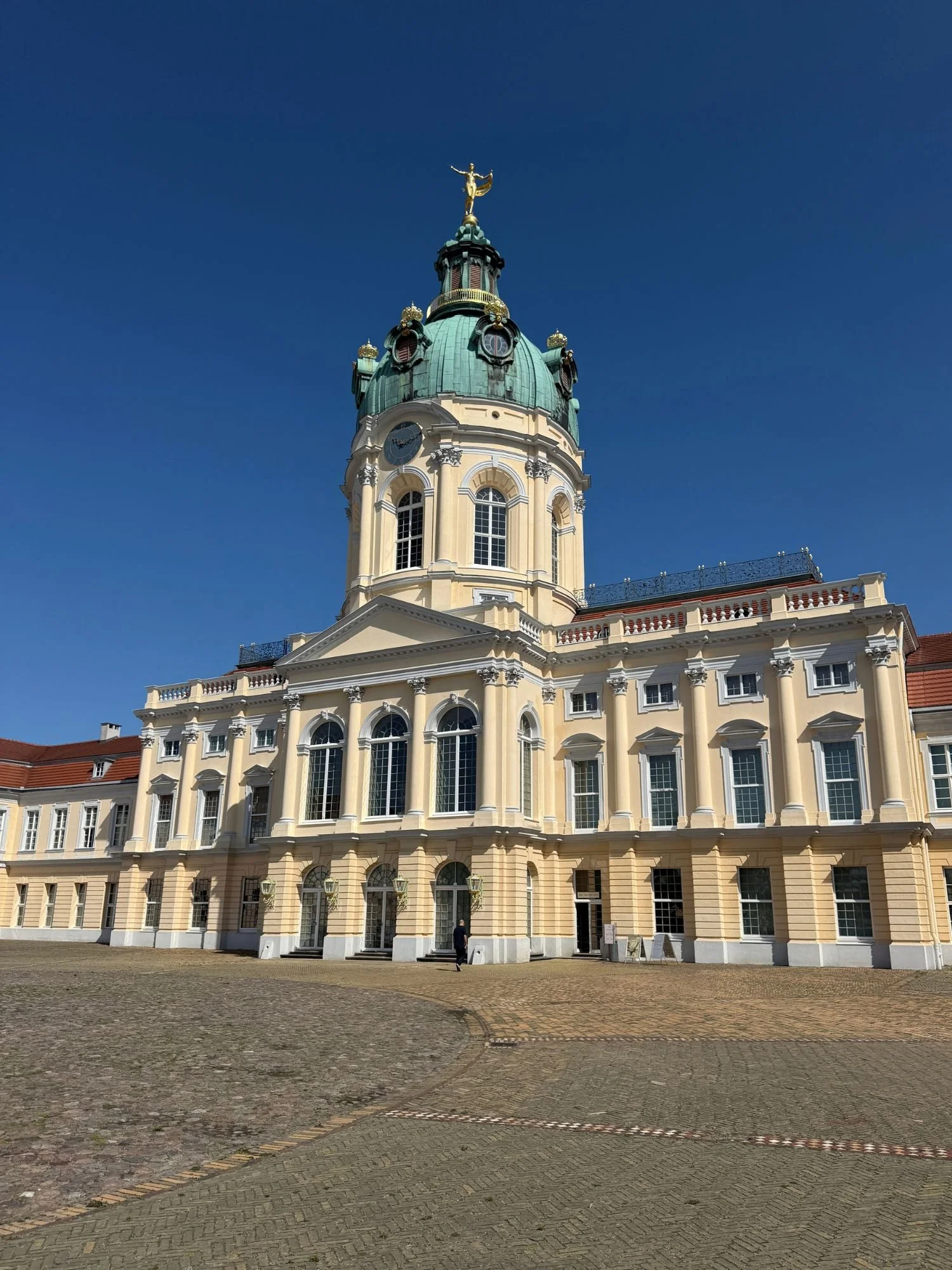
The front entrance to Charlottenburg Palace from Spandauer Damm
Painstakingly restored during the post-war era, Berlin’s largest surviving royal residence offers an exceptional showcase of eighteenth-century Prussian history, Baroque architecture, and fine art that rivals the city’s traditional museum halls.
A brief history of Charlottenburg Palace
The palace estate began in 1695 as Schloss (castle) Lietzenburg, built as a summer retreat for Sophie Charlotte, the cultured wife of Elector Frederick III (later King Frederick I of Prussia). Following her early death in 1705, the King renamed both the palace and the surrounding area Charlottenburg in her honour. Successive royal expansions and decades of careful post-war restoration have preserved it as the largest surviving palace in Berlin, offering today's visitors a direct, tangible window into eighteenth-century court life.
What to expect inside the Palace
Inside the palace, you will discover soaring reception rooms bathed in natural light, vivid gilded interiors, a world-class porcelain collection, and an extraordinary display of eighteenth-century French paintings, including works by Jean-Antoine Watteau and Antoine Pesne.
Following the natural visitor route through the staterooms and royal wings allows you to take in the collection at your own pace, with several spaces immediately catching the eye.
Vivid Damask and Gilded Interiors provide immediate visual drama. One striking room features rich raspberry-damask walls, gilded mouldings, and Delft-tiled fireplaces, carrying the sort of vibrant warmth you would expect at the Villa Ephrussi de Rothschild rather than in northern Germany.
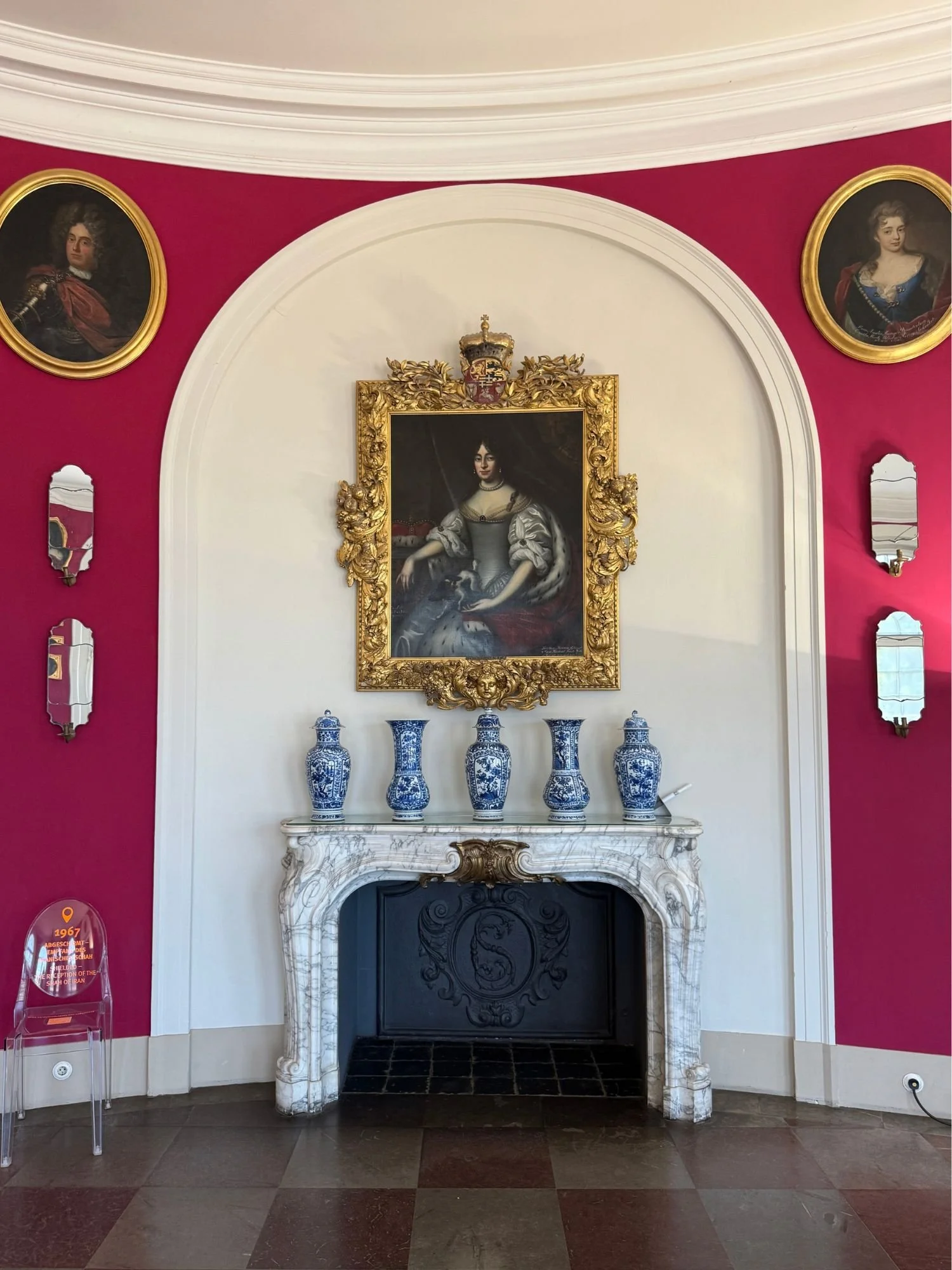
Glorious raspberry coloured walls
The Masterpieces of the New Wing house one of the finest collections of eighteenth-century French paintings outside France. Art lovers can view major works by Jean-Antoine Watteau, including The Embarkation for Cythera, displayed beneath delicate Rococo ceilings. (note the original artwork is in the Louvre!)
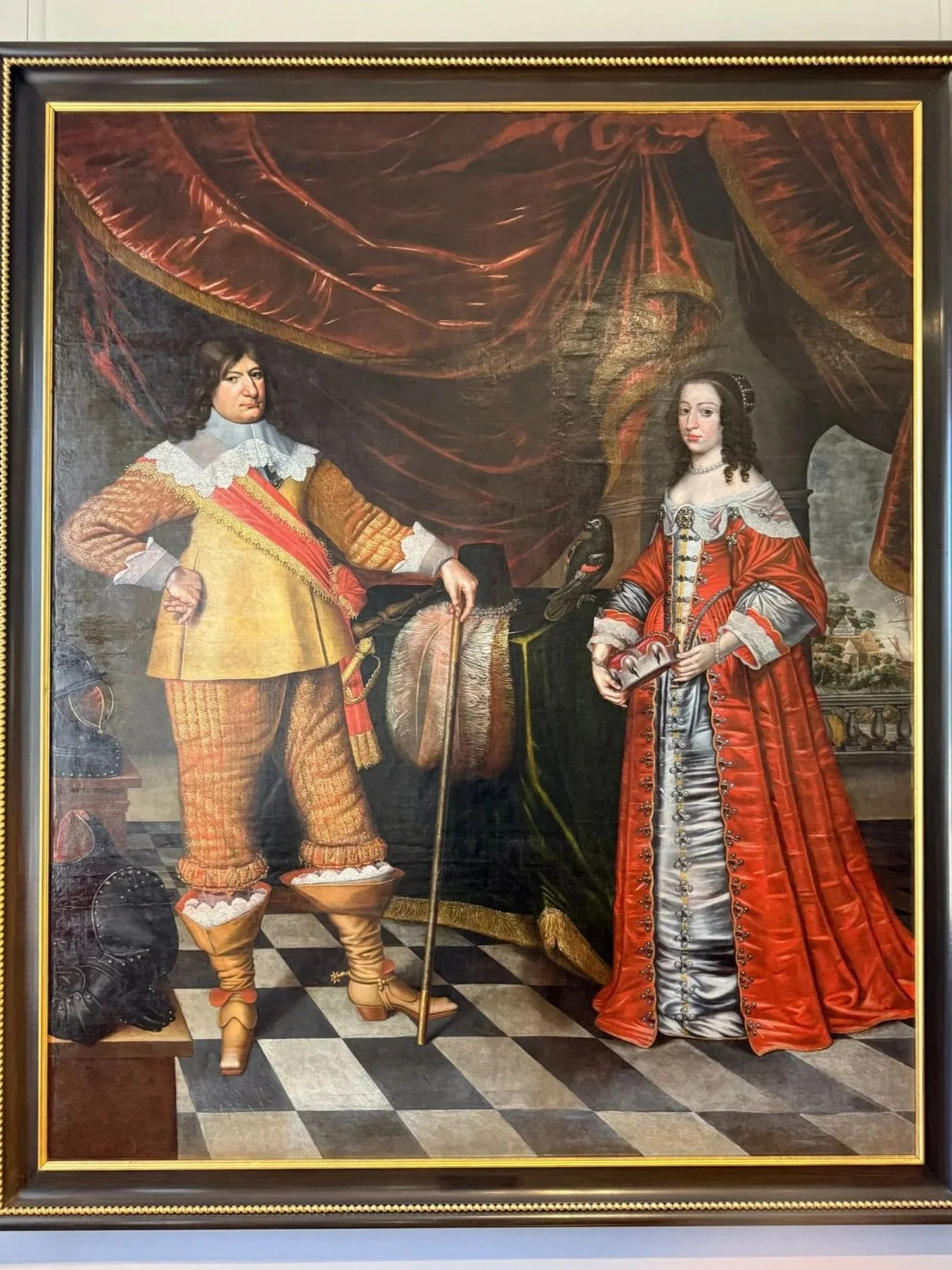
A double portrait of Elector Frederick William (the ‘Great Elector’) and Luise Henriette of Orange-Nassau by Gerrit van Honthorst, displayed in the Old Palace apartments at Charlottenburg
The Porcelain Cabinet is an extraordinary Baroque spectacle. Thousands of pieces of delicate seventeenth- and eighteenth-century Chinese and Japanese porcelain cover the walls from floor to ceiling.
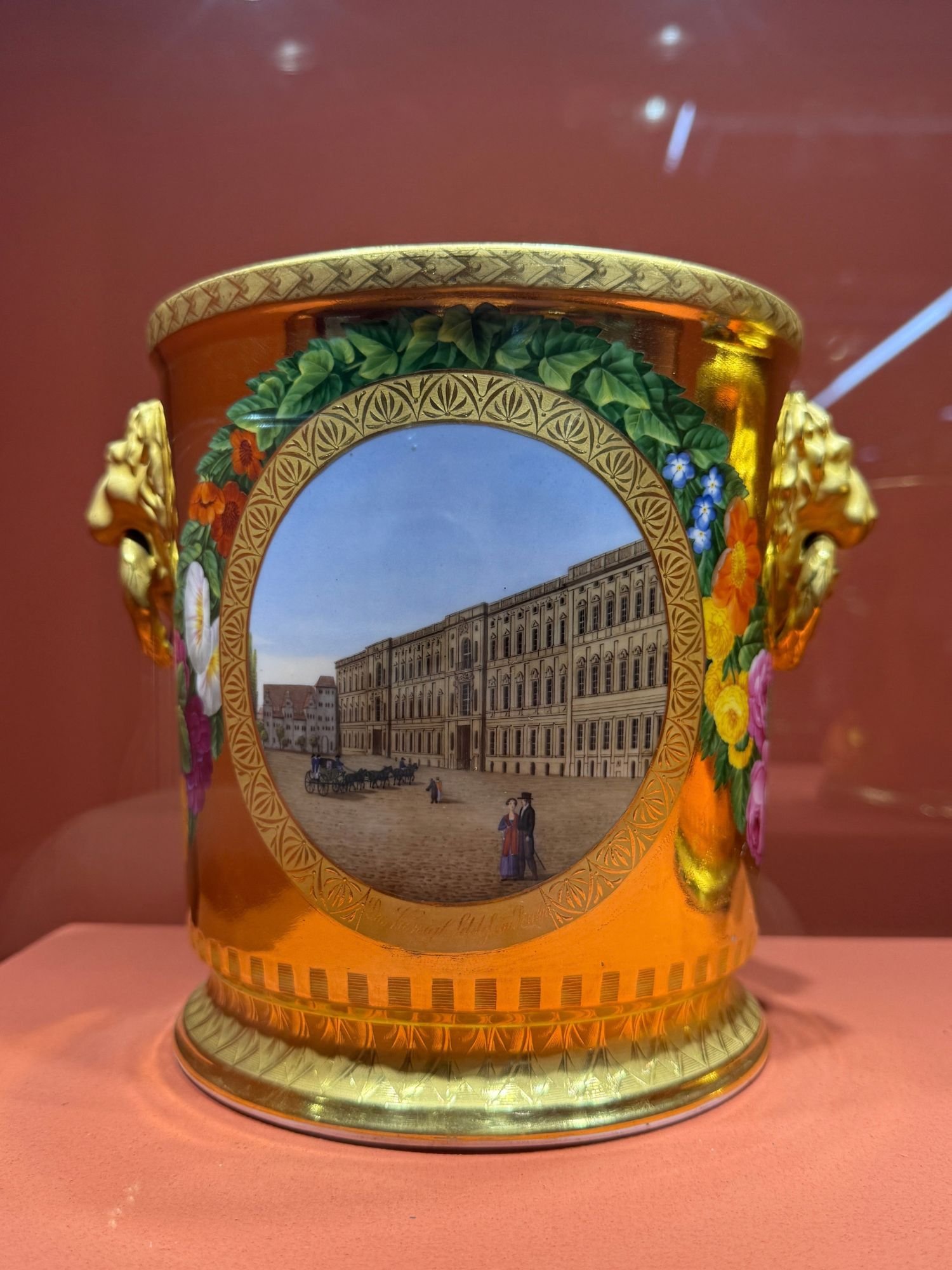
A stunning porcelain wine cooler, my favourite object in the Porcelain cabinets
The Sunlit Reception Rooms offer a wonderful sense of scale, especially the soaring garden hall. Tall arched windows flood the oak parquet with morning light, framing views across the formal parterres that feel completely detached from the bustle of central Berlin.
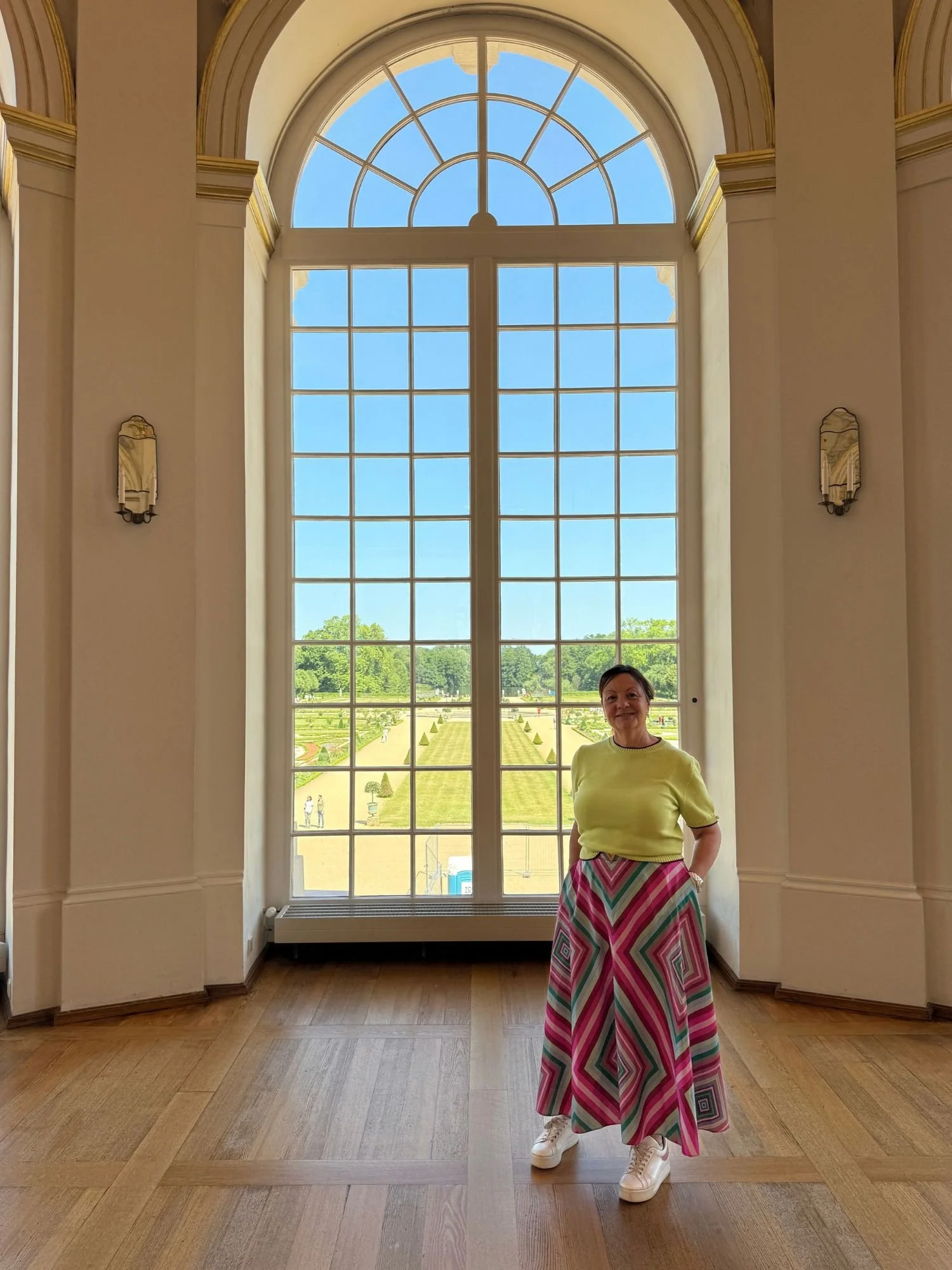
Katherine bringing the sunshine
The Gardens and the Belvedere Folly
Behind the palace, the landscaped Schlosspark transitions from formal French Baroque parterres into the softer, natural curves of an English country garden tracing the River Spree. While our limited time meant we could not explore every corner of the estate, following the gravel path down towards the water brings you directly to the Belvedere. Built in the late eighteenth century by Carl Gotthard Langhans as a royal teahouse and viewing folly, this pastel-blue pavilion nestled among the trees is a charming, quiet discovery on the approach to the river.
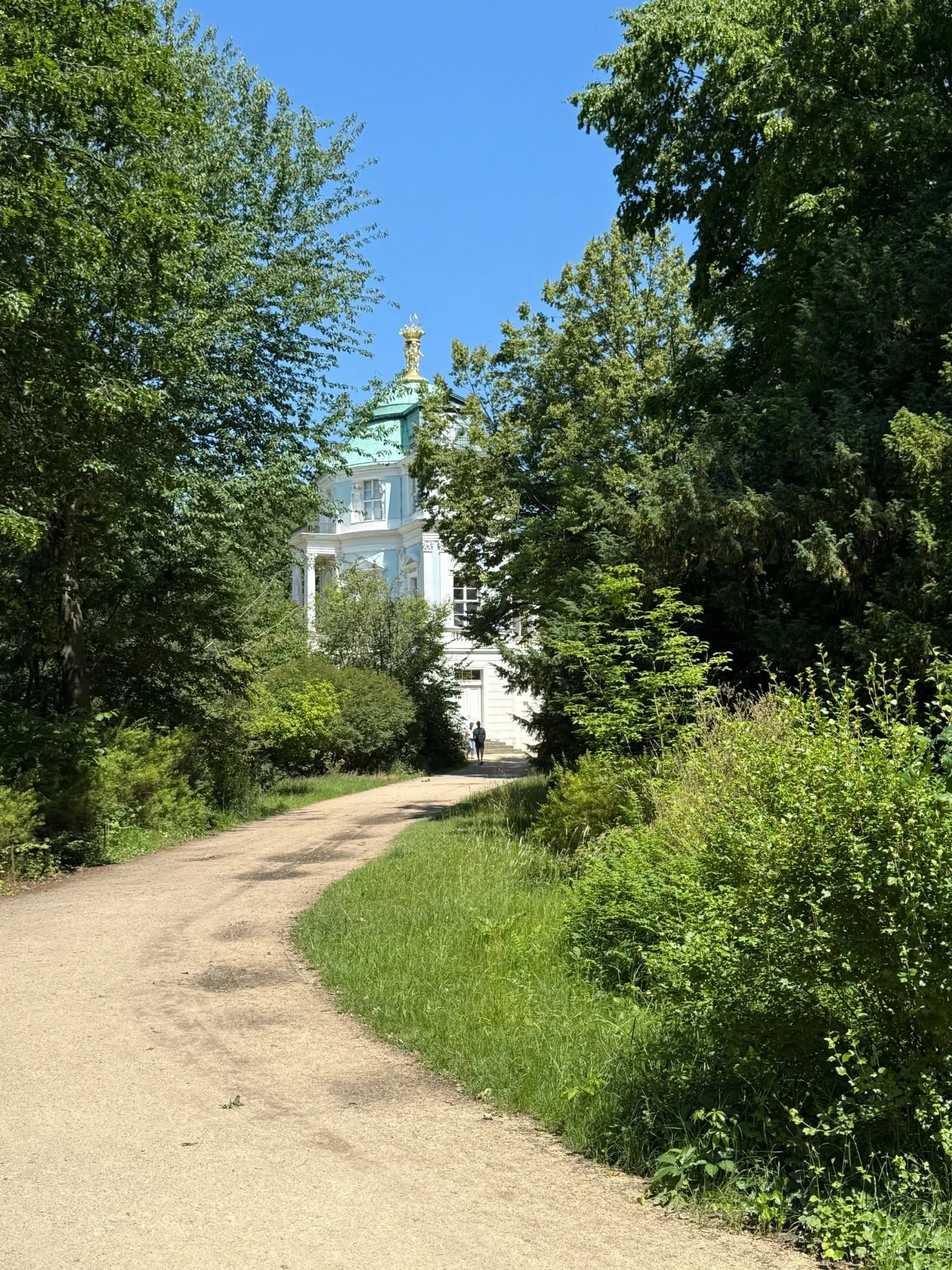
The beautiful Teahouse. Sadly no longer open to visitors.
Our Experience of visiting the Palace
We spent roughly three hours exploring the palace rooms and the immediate parkland, which offered plenty of time to take in the architecture without feeling rushed.
Visiting on a weekday morning meant we had plenty of space, and time to enjoy the palace and it’s collections. At around 30 Euros per person we felt the ticket offered great value for our visit and potentially even better value if you stayed to enjoy the wider gardens.
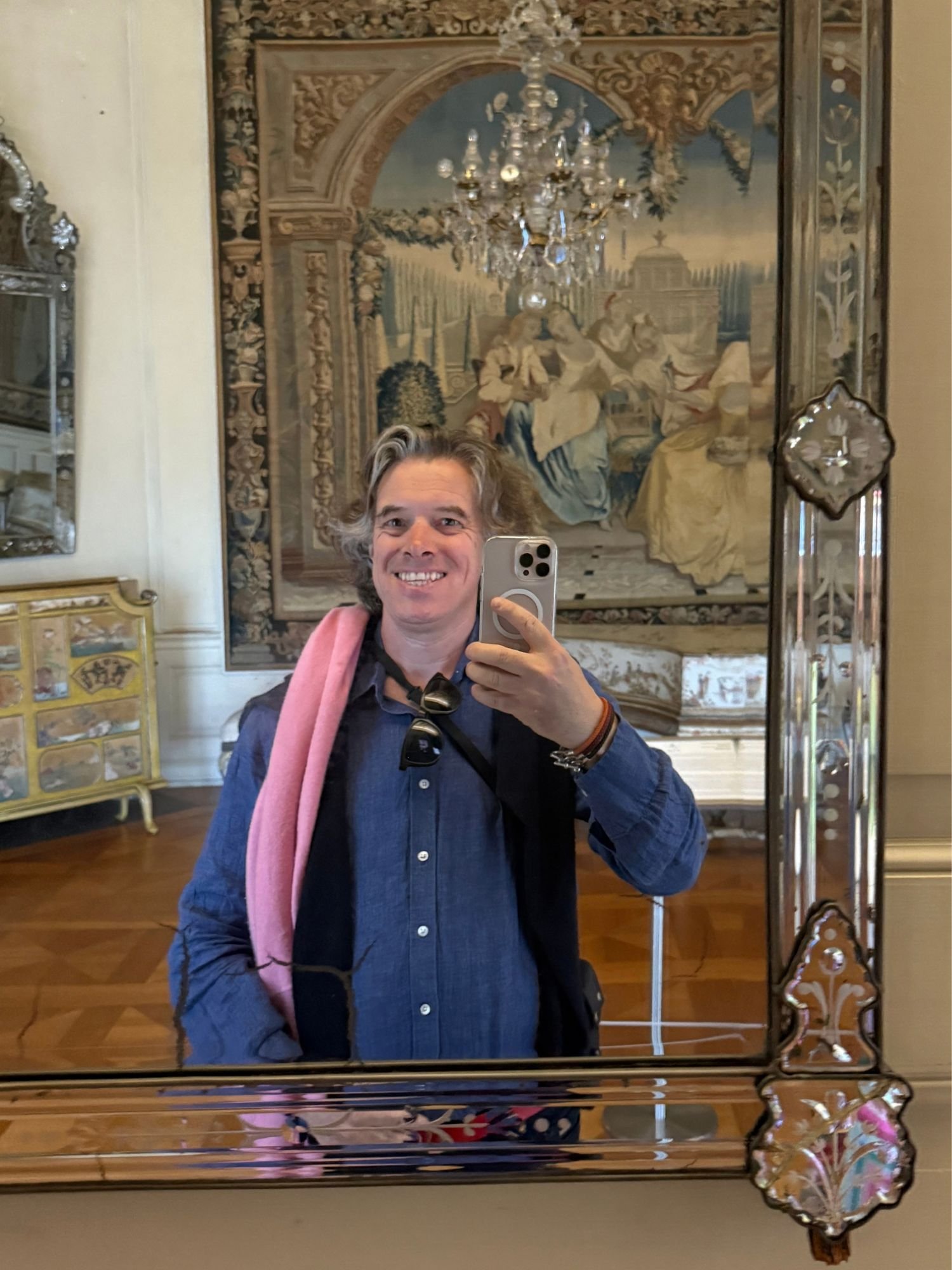
Happy visiting the staterooms at Charlottenburg Palace, reflected in one of the palace’s ornate etched-glass mirrors
While most cultural itineraries in the German capital understandably gravitate towards twentieth-century history, the austere stone of Museum Island, or the modern open-air murals at the East Side Gallery, Charlottenburg presents a completely different face of the city.
Practical Tips for Visiting Schloss Charlottenburg
Who Will Enjoy It: Ideal for visitors seeking fine art, elegant decorative interiors, and eighteenth-century German history. If you appreciate the royal splendour of Versailles or the grand ducal palaces of Austria, Charlottenburg makes a wonderful, rewarding addition to your Berlin itinerary.
Address: Spandauer Damm 20-24, 14059 Berlin.
Website: https://www.spsg.de/en/palaces-gardens/object/charlottenburg-palace-old-palace
Coffee Stop: If you arrive before the palace gates open, head along Spandauer Damm directly opposite the grounds. There are several relaxed neighbourhood cafes where you can grab a morning espresso while the quarter slowly wakes up.
Getting There: Reaching the palace using Berlin's public transport is simple:
U-Bahn: Take the U7 to Richard-Wagner-Platz (around a 10-minute walk down Otto-Suhr-Allee) or the U2 to Sophie-Charlotte-Platz (about 15 minutes away). After our visit, the U2 gave us a direct, effortless route straight back through to the Brandenburg Gate and onward to our base at the Hotel de Rome on Bebelplatz.
Bus: The M45 and 109 routes stop right outside the palace gates at Luisenplatz / Schloss Charlottenburg.
Combine with Shopping: From the palace, you are a short bus or underground hop south to Kurfürstendamm (Ku'damm), making it easy to pair Prussian history with lunch and an afternoon browsing Berlin's grand retail boulevard.
Opening Hours:
April to October: Tuesday to Sunday, 10:00 to 17:30.
November to March: Tuesday to Sunday, 10:00 to 16:30.
Closed Mondays.
The palace gardens open daily from 8:00 until dusk with free admission.
Photography: Personal photography without flash, tripods, or extension poles is allowed throughout the palace staterooms and galleries, making it very straightforward to photograph the ornate interior details.
Tickets: The Charlottenburg+ ticket grants entry to the Old Palace, the New Wing, and the park pavilions. Booking an entry time slot online in advance saves queuing at the ticket desk.
Click here for more Berlin Travel Inspiration.
The beautiful hero image of Charlottenburg Palace was taken by János Csatlós